Is there a backwater valve rebate in Calgary?
Written for Calgary homeowners · Last reviewed August 16, 2026
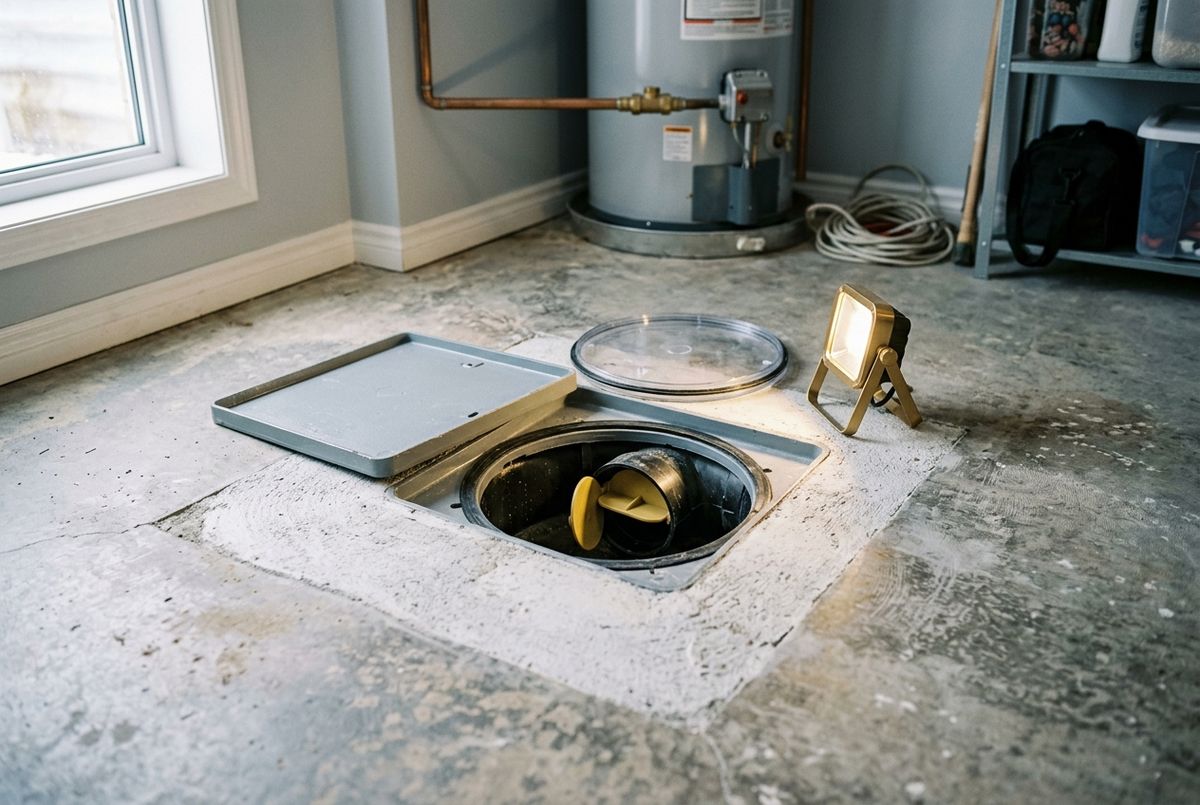
You're pricing a backwater valve, someone mentioned there's a rebate, and now you're trying to find it on calgary.ca and coming up empty. You're not missing a page.
Short answer: As of August 2026, there is no City of Calgary rebate, subsidy or grant for residential backwater valves or sump pumps. Calgary's only stormwater incentive is a developer program for projects with three or more primary housing units, and it doesn't cover either device. Edmonton homeowners can get up to $800 through EPCOR; Calgary homeowners currently get nothing. If you install one here, you pay for all of it.
Sources: The City of Calgary — Stormwater incentive program and Climate-ready measures: drainage and water management.
That's the whole answer, and it's the one nobody in this market seems willing to write down.
Why everyone assumes there is one
Because almost everywhere else, there is. Edmonton runs a backwater valve subsidy through EPCOR. Cities across Ontario have had flood-prevention grants for years. So when a Calgarian hears about a rebate from a sibling in Edmonton or a coworker from Toronto, the reasonable conclusion is that Calgary must have something similar and they just haven't found the page yet.
The second reason is how the topic gets written about. Some pages in this market are worded so a program sounds like it exists — an offer to help you with the rebate, or to point you at the current City program — without ever naming it, dating it, or linking to it. Nothing there is provably false. You can still finish reading and believe money is available. That's why the practical test below is worth applying to anyone, including us.
The test to apply to any plumber who mentions a rebate: ask them to email you the link. Not the offer to help with paperwork — the actual URL on calgary.ca, before you book. How a company handles that request tells you how they'll handle the parts of the quote you can't independently check either.
What The City does offer, and why it won't help you
Calgary's stormwater incentive program is real. It just isn't for you unless you're building something substantial.
| Calgary | Edmonton (EPCOR) | |
|---|---|---|
| Backwater valve rebate for a homeowner | None | Up to $800, interior or exterior installation |
| Sump pump rebate for a homeowner | None | Not part of the valve subsidy |
| Who qualifies | Stormwater incentive is for developments of 3+ primary housing units | Homes built before 1989, or with a history of sanitary backup |
| Maximum | Up to $50,000 — to the developer, for stormwater management, not for these devices | $800, first-come first-served |
So if you're a homeowner adding a backwater valve to a 1968 bungalow in Renfrew, that $50,000 figure has nothing to do with you. It exists for multi-unit development stormwater management, and backwater valves and sump pumps aren't what it funds. Quoting it at a homeowner would be misleading, which is why we've spelled out the eligibility rather than just the number.
On how confident we are. This is a negative claim, and negative claims are harder than positive ones. We checked The City's climate-readiness page — which discusses backwater valves and sump pumps at length and offers no financial incentive — and the stormwater incentive program page, which is developer-facing. Absence of evidence is strong here, but it isn't absolute. This page reflects August 2026. Before you spend money, re-check calgary.ca and phone 311 to ask directly whether any residential flood-prevention rebate exists. If one launches, we'd rather you find it than trust a page we wrote.
Calgary homeowners install them anyway. Here's why that's still rational
It's the one device that stops the main coming back at you
A backwater valve is a one-way gate on your building drain: waste flows out, and when the sanitary main surcharges, a flap closes against the reverse flow. Nothing else on your property does that job — which means on a house with a finished basement it's the difference between a wet afternoon and replacing drywall, flooring, and everything stored down there.
The code may already require protection
The National Plumbing Code 2020 requires fixtures located below the level of the adjoining street and subject to backflow to be protected (s. 2.4.6.4). In plain terms, a basement bathroom or laundry below street level generally needs backflow protection — so on a basement development this isn't really a nice-to-have you're choosing, and your inspector will very likely be looking for it. Confirm the requirement for your specific job with 311 or the City's Technical Assistance Centre before you build around it.
A permit means it gets inspected
A plumbing permit is required to install a backflow prevention device. That's a benefit disguised as paperwork: a permitted install is inspected, so you find out it's the right device, the right way round and accessible for servicing now — not on the night the main surcharges and the flap doesn't seat.
Your insurer may care
Whether a valve changes your sewer backup coverage or your premium is specific to your policy and your insurer, so it's a phone call, not a rule. Make it before you book the work — if there's a discount attached, it partly offsets an install you're paying for entirely out of pocket.
Sources: The City of Calgary — Climate-ready measures (permit requirement) and the City's plumbing advisory on backwater valves (NPC 2020 s. 2.4.6.4). That advisory states on its face that it has no legal status and cannot be used as an official interpretation of the codes, bylaws and regulations in effect — treat it as a strong signal about how the City is thinking, then confirm your specific job with 311 or the City's Technical Assistance Centre.
If your basement is or will be a legal secondary suite, there's an extra rule that catches a lot of people out — one normally-open valve may only serve one dwelling unit. We've written that up separately, because it can mean an existing shared valve has to be reconfigured.
What actually drives the cost — and why nobody will quote you on the phone
We couldn't find a Calgary company publishing a number for this, and for once they're right not to. We're not going to publish one either, and here's the honest reason: the same device in two houses on the same street can differ by a multiple, because the work isn't the valve, it's getting to the drain.
- Access to the main building drain. If the line runs under an open, unfinished basement floor with a cleanout nearby, it's a straightforward job. If it runs under a finished rec room, a tiled bathroom or a bearing wall, the flooring comes up first and goes back after.
- How deep the pipe sits. A drain 300 mm under the slab and a drain a metre down are different excavations, different shoring considerations and different re-fill volumes — so depth alone can move the price more than the choice of valve.
- Concrete cutting and making good. Interior installs mean saw-cutting the slab, digging out, setting the valve and access box, then re-pouring. Ask specifically whether the quote includes restoring the concrete to a finished surface, because "patched" and "finished" are different line items.
- Interior versus exterior. An exterior install in the yard avoids cutting your floor but means excavation, and in Calgary that means frost depth and a season when it's practical.
- Whether the line is fit for it. If the camera shows a cracked or root-filled clay line, you're not adding a valve to a healthy drain — there's a repair conversation first. Who owns which section of that pipe decides who pays for it.
- Timing. Doing it as part of a basement development while the floor is already open costs a fraction of coming back for it as a standalone job in five years.
What to insist on instead of a phone number: a site visit, a written fixed price, the make and model of the valve, confirmation that the permit and inspection are included and in whose name, and a line covering the concrete. Our write-up of the install itself goes through the three places the valve can go, the inspection that has to happen before the concrete, and the rest of that checklist. For general context on what an hour of a plumber's time runs in this city — and why every published figure is a company's self-report rather than an authoritative source — see what Calgary plumbers charge.
How to check whether you already have one
- Look at the basement floor near where the sewer exits. Usually the street-facing side, in the same neighbourhood as the floor drain and the cleanout. You're looking for a round or rectangular access cover set flush in the concrete, often plastic, sometimes with a clear lid.
- Don't confuse it with the cleanout or the floor drain. The cleanout is a capped pipe fitting for augering the line; the floor drain is a grate. A backwater valve has a service cover big enough to reach the flap through.
- Check the permit and inspection history. If you bought recently, your purchase file and Real Property Report may tell you. A permitted install leaves a record.
- Camera the line if it still isn't clear. A valve body is unmistakable from the inside, and you get a condition report on the rest of the drain at the same time — two answers for one visit.
- If you have one, service it. Open the cover once a year, check the flap is clean and moves freely, and clear any debris caught on the seat. An unmaintained valve that can't close is the same as not having one, and this is the maintenance almost everybody skips.
If your problem is water coming up through the floor rather than back up the sewer, the device you want is a different one — see sump pumps and Calgary's discharge rules, including where you're not allowed to send the water. And for the wider picture of what goes wrong in Calgary houses and why, start at our main Calgary plumbing guide.
Want a real number for your basement?
We'll look at where your drain actually runs, tell you what the install involves in your house, and give you a written fixed price including the permit and the concrete — so the figure you agree to is the figure on the invoice. We'll also tell you if your line needs work first instead of quietly building it into the job later.
Questions Calgary homeowners actually ask
My neighbour swears Calgary pays for backwater valves. Are they thinking of somewhere else?
Almost certainly. Backwater valve subsidies are common across Canada — Edmonton has one through EPCOR worth up to $800 for eligible homes, and several Ontario cities run programs too. So when Calgarians hear about a rebate from family elsewhere, it sounds entirely plausible.
As of August 2026 we can't find one here. The City's own climate-readiness page walks through backwater valves and sump pumps in detail and doesn't attach a dollar to either. If your neighbour actually received money, ask them who cut the cheque — it may well have been their insurer rather than The City, since some insurance discounts and loss-prevention programs do exist and get remembered as a rebate years later.
A plumber's website told me they'd point me to the current program on calgary.ca. Is that legit?
Wording like that is doing a lot of work. It implies a program exists without ever naming it, which means nobody can be accused of lying but you still walk away believing money is available. We looked and couldn't find a residential program to point anyone at.
The fair test is simple: ask them to send you the link. Not "we'll help you with the paperwork" — the actual URL on calgary.ca, in an email, before you book. A company that's straight with you about a rebate not existing is telling you something useful about how they'll handle the parts of the quote you can't verify either.
If there's no money in it, why would I install one?
Because the alternative is what a surcharged sewer main does to a finished basement. A backwater valve is a one-way gate on your sewer line: waste flows out, and when the main backs up, a flap closes and it doesn't come in. On a Calgary house with a developed basement, that's the difference between an inconvenient afternoon and gutting the drywall.
There's also a code angle. The National Plumbing Code 2020 requires fixtures below the level of the adjoining street that are subject to backflow to be protected, so on a lot of newer builds and basement developments this isn't optional anyway. And it's worth one phone call to your insurance broker — ask whether having one changes your sewer backup coverage or your premium, because that answer is specific to your policy and can shift the maths.
How do I tell whether my house already has one?
Look at your basement floor near where the sewer line leaves the house, usually on the street-facing side. A backwater valve normally sits in a small box in the concrete with a round or rectangular access cover, often plastic, sometimes with a clear lid so you can see the flap. It's not the floor drain and it's not the cleanout cap, though the three often live within a couple of metres of each other.
No cover means probably no valve, but not definitely — older installs get poured over or hidden under flooring during a basement development. Two ways to settle it: a camera pass down the line will show a valve body from the inside, and if you bought recently, check your Real Property Report and permit history. Calgary homes built after backflow protection became a common requirement are far more likely to have one than a 1960s bungalow.
Do I need a permit, or can my handyman put one in?
A plumbing permit is required to install a backflow prevention device in Calgary. That's not a formality — the valve cuts into your main building drain, usually through the basement slab, and if it's installed backwards, at the wrong slope, or without an accessible cover, you've got a device that fails silently until the night you need it.
Unpermitted work on a drainage system is also the sort of thing that surfaces at the worst moment, during a sale or an insurance claim. If you're doing the work yourself, read up on what Alberta actually lets a homeowner do first — and note that if the basement is or will be a rented suite, the rules change again.
Why won't anyone give me a price over the phone?
Because the honest range is so wide it isn't useful, and the people quoting you a tidy number on the phone are either padding it or planning to revise it in your basement. The cost turns almost entirely on things nobody can see down a phone line: how deep the main drain sits under your slab, whether the spot where it needs to go is under finished flooring or a bathroom, how far the crew has to break and re-pour concrete, and whether there's clean access to the line at all.
What you should insist on is a site visit and a written fixed price before anyone starts cutting, plus a line on that quote for making good the concrete. If the valve is going in as part of a basement development you're already doing, the incremental cost is much lower than doing it as a standalone job later — that's the timing decision worth thinking about.