Gas line permits in Calgary: what a homeowner can and can't do
Written for Calgary homeowners · Last reviewed August 16, 2026
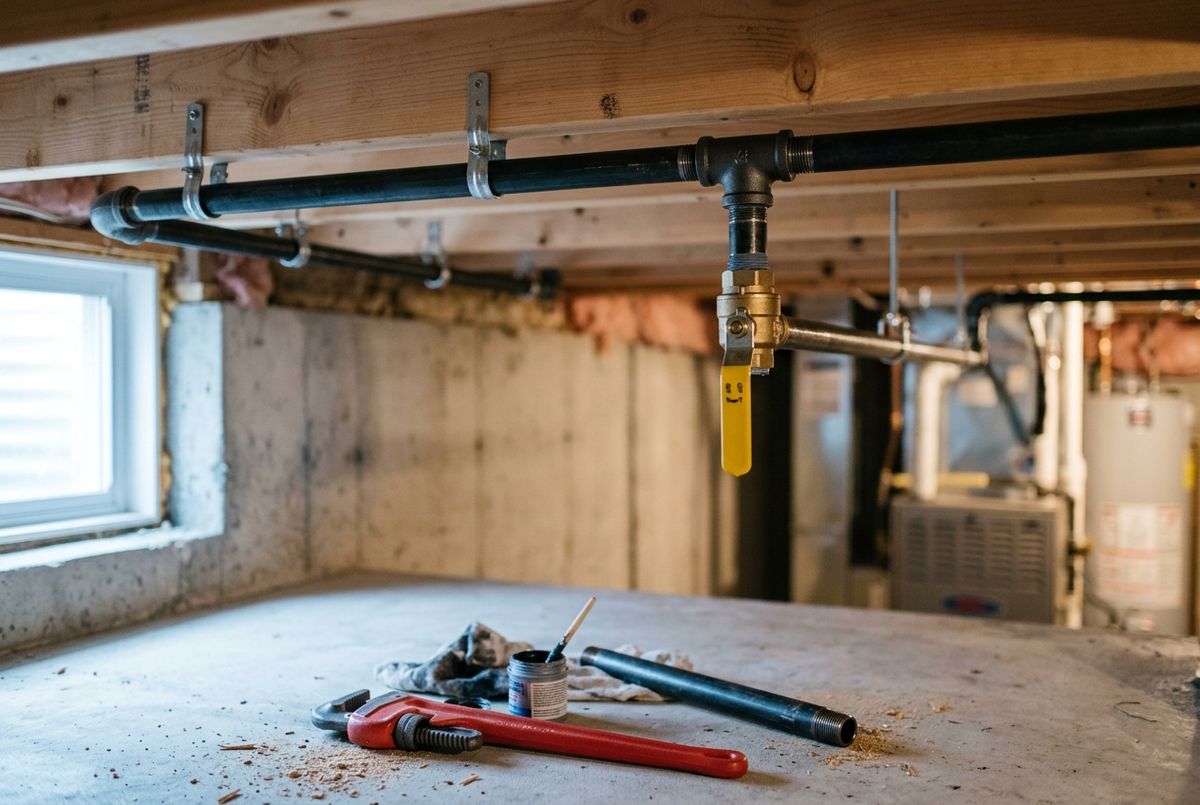
Short answer: Yes, a gas line needs a permit in Calgary — and no, you can't pull it. Unlike plumbing, where Alberta gives homeowners a genuine DIY exemption, the City only issues a gas permit to a homeowner who personally holds Alberta first- or second-class gasfitter certification, resides at the address, and applies in person with proof. Everyone else uses a licensed contractor, who pulls the permit and does the work. The one exception is a gas fireplace insert, and even there a licensed gas fitter must make the connection.
You want a line to the BBQ so you stop carrying cylinders to the hardware store. Or a gas range because you're tired of cooking on electric. Or a heater in the garage so working out there in January stops being a form of punishment. All reasonable, all permitted work, and all subject to a rule that catches people off guard the first time they hear it.
The rule nobody states plainly
"A homeowner can apply for a gas permit only if he or she is an Alberta certified journeyman gasfitter working on a single family residential home. The homeowner applicant must reside, or intend to reside, at the work location and must apply in person with proof of qualifications."
Source: The City of Calgary — Plumbing and gas permits. See also Homeowner electrical and plumbing permits, which states homeowners cannot take out a gas permit on their house unless they hold first- or second-class gasfitter certification. Current as of August 2026.
Read that against the plumbing side and the contrast is stark. Alberta's trade rules include an owner exemption that lets you do plumbing work on a home you own and live in, and the City will sell you a homeowner plumbing permit for $116.50 to go with it. Same house, same person, same afternoon — and on gas the answer flips to a flat no. The full breakdown of what you can legally do yourself is here.
The City is equally direct about the permit itself being non-optional: "All plumbing and gas installations require permits, including installations for renovation work." There's no small-job threshold that lets a BBQ stub slide.
The gas fireplace exception
One narrow carve-out exists. A homeowner may pull a permit to install a gas fireplace insert themselves — but a licensed gas fitter must make the gas line connection. You can set the box, frame it and finish it. You cannot join it to the gas.
Gasfitting is a separate ticket from plumbing
This is the piece that explains everything above. In Alberta, plumbing and gasfitting are two different certifications with two different bodies of knowledge. A plumber's Red Seal endorsement requires passing both the Plumber and the Gasfitter Class B interprovincial exams — the exam structure itself tells you they're not the same trade.
Source: Alberta Trade Secrets — Plumber trade profile
What that means for you as a customer: "licensed plumber" on the side of a van does not tell you whether the person arriving can legally touch your gas. Ask who's coming and what they hold. It's a one-sentence question, anyone legitimate answers it without hesitating, and it saves you the specific misery of a job that has to be redone before it can pass inspection.
The jobs people actually call about
| Job | What it actually involves |
|---|---|
| BBQ or patio line | Branch off an existing line or the manifold, run to an exterior wall, penetrate, shut-off and quick-connect on the outside. Placement matters here — keep the stub and its valve clear of snow drift and roofline ice fall. |
| Gas range in the kitchen | New branch to the kitchen, usually the awkward part is routing through finished floors and cabinetry rather than the gas work itself. Needs a shut-off accessible behind or beside the appliance. |
| Garage or shop heater | Often the longest run on the list, sometimes underground or through an attached garage wall. Combustion air and venting for the heater get designed alongside the line, not after it. |
| Fire table or patio heater | Permitted if it's a fixed connection to your gas system. A portable cylinder appliance you screw on yourself isn't an installation. |
| Furnace or water heater replacement | Gas connection and venting both in play. On water heaters especially, this is what turns a "simple swap" into permitted work — detail here. |
| Meter relocation | The meter belongs to the gas distributor, not to you, so this is a request to them as much as a job for a contractor. Ask about their process and lead time first — it is rarely quick. |
Sizing and pressure, in plain terms
The single most common technical mistake on residential gas additions isn't a bad joint — it's adding a load the system can't carry. A gas line is sized for the total demand of everything hanging off it, over the length it has to travel, at the pressure available. Add a 50,000 BTU garage heater to a system that was sized years ago for a furnace, a water heater and a fireplace, and the failure isn't dramatic. It's subtle: appliances that underperform, a furnace that short-cycles or drops out when the range and the heater run together on a cold night.
So a proper quote starts with a load calculation, not a tape measure. Two questions tell you whether the contractor is doing that:
- What's the total connected load once this is added? They should be adding up every gas appliance in the house, not just the new one.
- Is the existing line and meter capacity adequate for that, at this distance? If the honest answer is no, you're looking at an upsized run — better to know that in the quote than halfway through the job.
Two properties on the same street can get very different answers here, depending on when the house was built and how much has been added since.
What actually drives the price
We're deliberately not publishing a dollar figure for a Calgary BBQ gas line. There's no authoritative public source for local gas fitting rates, the honest spread between an easy job and a hard one is very wide, and a number on a web page mostly serves to anchor you before anyone has looked at your house. What we can do is tell you exactly which variables move it.
Distance from the meter
Length of pipe is the most obvious driver, but it also feeds back into sizing — a longer run may need a larger diameter to deliver the same load, so distance costs twice.
Whether it crosses finished space
An unfinished basement ceiling is open access. A finished basement means drywall comes out and goes back, and that repair work is often a bigger line item than the gas itself.
Existing capacity
If the current system has headroom, you're branching off it. If it doesn't, part of the existing run gets upsized — a materially different job for the same end result.
Beyond those three: exterior penetrations and how the wall is built, whether any of the run is underground, and the permit and inspection itself. On the permit side, the City's contractor trade permit is $112 processing plus $9.79 per $1,000 of construction value, with $116.50 as the minimum — which on a residential gas addition typically sits at the low end. The permit is not the reason a gas job costs money.
Source: City of Calgary building and trade permit fee schedule
If you want a broader sense of local labour rates before you start collecting quotes, we've laid out what Calgary plumbers publish and why none of it is authoritative. To compare quotes fairly, give every contractor the same three facts — distance, finished space, existing load — and see who asks follow-up questions. The ones who ask are the ones who've done the calculation.
Permits and inspection, start to finish
- Your contractor pulls the gas permit. Not you, and not "we'll sort the permit later." If a quote is cheaper because nobody's pulling one, that's the whole explanation for the discount.
- The line goes in and gets pressure-tested. The test is the point — a line under test either holds or it doesn't, and that's what an inspector wants to see rather than take on trust.
- Inspection before concealment. Anything running inside a wall, floor or ceiling needs to be seen before it's covered. Someone 18 or older has to be at the property to let the inspector in.
- Final inspection once appliances are connected. Inspections are booked through 311 or the City's online system; next-day requests generally need to be in by 2 p.m.
Source: The City of Calgary — permits and inspections
The reason to care about the paperwork rather than resent it: an unpermitted gas appliance is one of the first things a home inspector flags at resale, and it's an uncomfortable conversation to have with an insurer after an incident. The inspection is the cheapest part of the job and the only part that produces a record.
One Calgary-specific warning about search results
Search "gas line permit Alberta" and the City of Edmonton's pages come up relentlessly, including when you've typed Calgary. Edmonton is a separate permit-issuing authority with its own rules, forms and fees. Same province, different city hall, and the details do not transfer. Same applies to Airdrie, Cochrane, Okotoks and Chestermere — own municipalities, own processes.
If you're inside Calgary and genuinely unsure whether your job needs a permit, phone 311 and describe it. That call is free and it's the only answer that binds. More Calgary plumbing and gas basics →
Get a gas line quoted properly
Tell us where the meter is, where the appliance is going, and what else runs on gas in the house. You'll get a scope that includes the load calculation, the permit and the inspection — so the number you agree to is the number that finishes the job.
Questions Calgary homeowners actually ask
Can I run my own gas line to the BBQ if I'm careful?
No, and this one isn't a grey area the way DIY plumbing is. A Calgary homeowner can only take out a gas permit if they personally hold Alberta first- or second-class gasfitter certification, live at the address, and apply in person with proof of qualifications. If you held that ticket you'd already know. For everyone else, a licensed contractor takes out the permit and does the work.
It's a genuinely odd feeling if you've just been told you can legally replumb your own bathroom — same house, same owner, totally different answer. The reason is the failure mode. A bad solvent weld drips. A bad gas joint doesn't announce itself, and the consequences aren't limited to your property.
How much does a BBQ gas line cost in Calgary?
We're not going to publish a number, and we'd be a bit sceptical of the sites that do. There's no authoritative public source for Calgary gas fitting rates, and the spread between an easy job and a hard one on the same street is enormous — a stub straight out through a rim joist ten feet from the meter is a completely different job from a run across a finished basement to the far corner of the yard.
What you can do is get comparable quotes by giving every contractor the same three facts: how far the appliance is from the meter, whether the line has to cross finished space, and what else is already on the gas system. Those three variables drive most of the price. If someone quotes you over the phone without asking any of them, that number will change.
My plumber is Red Seal. Can he do the gas connection?
Maybe — ask, don't assume. In Alberta, gasfitting is a separate certification from plumbing. Earning the Red Seal endorsement as a plumber requires passing both the Plumber and the Gasfitter Class B interprovincial exams, so a Red Seal plumber usually does have gas qualifications behind them. But a journeyperson plumber without that endorsement may hold no gas ticket at all, and "licensed plumber" on a van tells you nothing either way.
The question to ask when you book is simply: who's coming, and what gas certification do they hold? It takes one sentence to answer and it's the difference between a job that passes inspection and one that doesn't.
Do I need a permit for a fire table or patio heater on the deck?
If it's connected to a permanent gas line, yes — you're adding to the gas system, and the City's position is that gas installations require permits, renovation work included. If it runs off a portable propane cylinder you screw on yourself, that's an appliance, not an installation.
The thing people underestimate on outdoor gas in Calgary is the winter side. An exterior stub, its shut-off and any regulator need to be positioned where snow load, ice fall from the roofline and a February drift aren't sitting on them. That's a placement conversation worth having before the line is run, not after the first chinook.
Can a gasfitter just move my gas meter to a better spot?
Not unilaterally. The meter isn't part of your house system in the way the piping downstream of it is — it belongs to the gas distributor, so a relocation is a request to them as well as a job for a contractor. Start by phoning your gas distributor and asking what their process and lead time is, then bring a contractor in around that answer.
Lead time is the part that catches people. If the meter move is on the critical path of a renovation, find out early — it is not the kind of thing that happens the week you decide you want it.
I found a permit page that says something different. Which applies?
Check whose page it is. Search for gas permits in Alberta and the City of Edmonton's pages come up constantly, even when you're clearly looking for Calgary information — and Edmonton is a separate permit-issuing authority with its own rules and fee schedule. Same province, different city hall.
Same goes the other way for the towns around us. Airdrie, Cochrane, Okotoks and Chestermere are their own municipalities with their own processes, so City of Calgary fees and rules do not apply there. If you're outside city limits, confirm with that town directly before assuming anything on this page transfers.