Backwater valves and plumbing rules for a legal secondary suite in Calgary
Written for Calgary homeowners · Last reviewed August 16, 2026
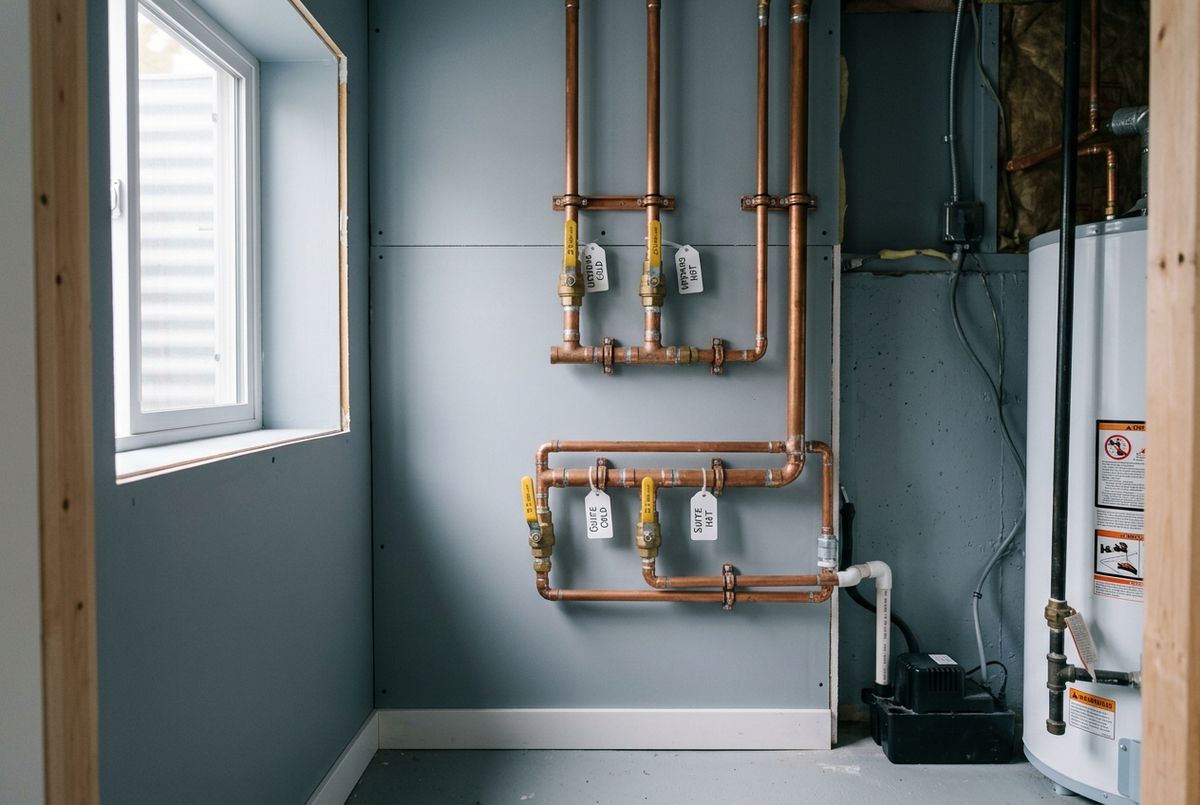
You're converting a Calgary basement into a legal secondary suite, or legalizing one that's already down there, and somebody has mentioned backwater valves. Here's the rule that catches people out.
Short answer: A normally-open backwater valve may serve only one dwelling unit, and a secondary suite counts as a separate dwelling unit. So a house with a suite has two dwelling units, and one shared valve doesn't satisfy that — existing installations may need to be removed, reconfigured, or have backwater protection added. Separately, the National Plumbing Code 2020 requires fixtures below the level of the adjoining street and subject to backflow to be protected (s. 2.4.6.4), which in a basement suite is most of the plumbing. A plumbing permit is required to install a backflow prevention device.
Source: The City of Calgary plumbing advisory, Secondary suites, backwater valves and protection from backflow (dated October 4, 2022), and Climate-ready measures for the permit requirement. Current as of August 2026.
Read the disclosure at the bottom of this page before you act on any of it — The City's advisories state in their own words that they have no legal status. That matters, and we'd rather put it up front than bury it.
Why one valve doesn't cover two units
Think about what a backwater valve does. It sits in the building drain and lets waste flow one way. When the sanitary main surcharges, the flap closes and holds the reverse flow out of your house. While that flap is closed, nothing behind it can drain either — anything discharged upstream of a closed valve has nowhere to go except up through the lowest fixture behind it.
That's the crux. If a single valve sits downstream of both the main house and the suite, then during a closure, drainage from the upstairs unit is heading toward a closed gate, and the lowest opening behind that gate is a fixture in the suite — the basement shower, the floor drain, the laundry standpipe. A tenant in a legal unit ends up wearing the consequences of a shower taken upstairs.
Which is why the advisory reads a normally-open backwater valve as permitted to protect a single dwelling unit only, and why a secondary suite — being a separate dwelling unit with its own kitchen, bathroom and entrance — can't share one with the house above it.
If your house already has a valve, don't assume either outcome. The advisory says existing installations may need to be removed, reconfigured, or have backwater protection installed to meet the minimum requirements. Which of those three applies depends entirely on where the valve sits relative to where each unit's drainage joins the main drain — something a plumber has to see, and something worth confirming with The City before the design is finalised.
The below-street-level rule, in a Calgary basement
NPC 2020 s. 2.4.6.4 addresses fixtures located below the level of the adjoining street that are subject to backflow: they need protection. Translate that to a typical Calgary basement suite and it covers essentially the whole unit — the toilet, the shower or tub, the kitchen sink, the laundry connection and the floor drain. All of it sits below the street, which is to say downhill from the main, which is where the water goes when the main can't take any more.
The benefit of dealing with this at design stage rather than at inspection is money and mess. Backflow protection on a basement drain generally means cutting the slab, and the cheap moment to cut a basement floor is when it's already bare and the walls aren't framed. Discovering the requirement after the tile is down and the vanity is in is the expensive version of the same job. If you're planning the fixture layout, basement bathroom plumbing in Calgary covers the drainage and venting side of the same decision.
The companion rule nobody mentions: shut-off valves and potable water
The backwater valve advisory has a sibling covering the supply side. In a building with more than one dwelling unit, the potable water system needs shut-off valves on the supply serving each unit — so one suite's water can be isolated without shutting down the other. NPC 2020 clause 2.6.1.3 is the reference, and the advisory treats a secondary suite as a separate dwelling unit for this purpose too.
Source: The City of Calgary plumbing advisory, Secondary suites, shut-off valves and potable water distribution systems (dated October 4, 2022).
There's a genuinely useful piece of flexibility in there for existing suites being legalized: rather than opening walls to install a single valve per unit, the advisory notes the alternative of shut-off valves at all fixtures throughout the building where that meets the underlying purpose. For a finished basement that's the difference between a plumbing retrofit and an afternoon's work — but whether it's accepted in your building is a conversation with your safety codes officer, not a decision to make off a web page.
Either way, the payoff is the same and it's worth having regardless of the code: a landlord who can isolate one unit's water can fix a leaking tap in the suite on a Tuesday afternoon without knocking out the upstairs kitchen, which is the sort of thing that stops a small repair turning into a tenant complaint.
What a suite conversion actually involves on the plumbing side
- Establish what's down there before you design anything. Where the main building drain runs, how deep it is, whether there's an existing backwater valve and where it sits in the run, and what condition the sewer line is in. On a pre-1970 house that last one matters — a clay tile line with root intrusion is a problem you want priced before you commit to a suite budget, not after. See who owns which section of that pipe.
- Call The City's Technical Assistance Centre through 311 with your layout. Describe the existing valve position and where the suite's fixtures will drain in. Ask directly how they read the one-valve-per-dwelling-unit requirement in your configuration. This call is free and it's the single highest-value thing on this list.
- Confirm the permits and whose name they go in. A plumbing permit is required to install a backflow prevention device, and permits are also required when a plumbing system is constructed, extended or altered — which a suite conversion very much is. Don't assume a development permit covers the trade permits, and see how a valve install actually runs for the inspection sequence.
- Do the slab work while the floor is open. Backflow protection, any drain relocations and the rough-in all want to happen in the same phase. Two concrete cuts cost more than one, every time.
- Book the inspections and keep the results. Rough-in and final are both required, and someone 18 or over has to be on site. Keep the paperwork — on a rental unit, that file is what protects you during an insurance claim or a sale years from now.
Permit and inspection requirements: The City of Calgary — Plumbing and gas permits
Can you do this work yourself? Probably not, if you're renting it out
Plumber is a compulsory certification trade in Alberta, which means the restricted activities legally require a journeyperson certificate, a recognized trade certificate, or registration as an apprentice. There's a well-known exemption for owners — and it's the exemption that matters here, because the wording has a condition in it that suite builders tend to skip past.
The exemption covers an individual performing the restricted activity on property they own, have possession of or control over, and intend only for "personal and not-for-profit use" by that individual.
Source: Alberta Trade Secrets — Plumber, classes of individuals
Our reading, clearly labelled as a reading. A suite you intend to rent is not, on the face of it, for personal and not-for-profit use. So the reasonable interpretation is that the owner exemption does not cover DIY plumbing in a rental suite, and the work needs a certified plumber. We want to be honest that this is an inference from the wording, not a ruling we've been shown and not settled law. Before you rely on it either way, phone Alberta Apprenticeship and Industry Training and ask them directly, and get legal advice if there's real money on it. Our fuller write-up of the DIY rules is at what Alberta actually lets a homeowner do.
Note that the same "not a rental" theme runs through The City's homeowner permit rules: to pull a homeowner's plumbing permit you must own the home, live in it or intend to reside in it, and do the work yourself. A basement you're building specifically to rent sits awkwardly against that, which is another reason to sort out the permit question before you start rather than during an inspection.
The honest disclosure: these advisories aren't the law
Both City of Calgary plumbing advisories cited on this page carry the same statement: advisory bulletins have no legal status and cannot be used as an official interpretation of the various bylaws, codes and regulations currently in effect.
We're putting that in bold rather than quietly citing the documents as though they were rules, because the difference is real. What the advisories give you is The City's published view of how the code applies to secondary suites — which is a very good indication of what an inspector will expect, and far better than guessing. What they don't give you is a binding answer for your particular house.
- Confirm with The City's Technical Assistance Centre (via 311) before your design is finalised, describing your actual drainage layout.
- Confirm with the safety codes officer assigned to your permit — they're the person whose interpretation decides whether your job passes.
- Get it in writing where you can. A note in your file saying who you spoke to and what they said is worth having if anything is questioned later.
- Re-check the advisories. The ones cited here are dated October 4, 2022 and this page reflects August 2026. Codes and advisories get updated.
Calgary has a large legal-suite market and a lot of people converting basements right now. That means a lot of contractors quoting suite work, and not all of them are current on the one-valve-per-dwelling-unit point — if a quote doesn't mention backflow protection at all, that's a question to ask, not an omission to be grateful for. Our main Calgary plumbing guide has the wider picture of what goes wrong in houses here and why.
Planning a suite and unsure where the valve leaves you?
We'll look at how your drain actually runs, tell you plainly whether your existing valve is fine, needs reconfiguring or needs company, and quote the work as a fixed price with the permit and inspection included — so your suite passes first time instead of failing on a detail nobody flagged.
Questions Calgary homeowners actually ask
My house already has a backwater valve. Doesn't that cover the suite too?
Probably not, and this is the part that surprises people. The City's plumbing advisory reads a normally-open backwater valve as being permitted to serve only one dwelling unit. A legal secondary suite is a separate dwelling unit, so once the basement becomes a suite you have two units and one valve, which doesn't line up.
The advisory language about existing installations is that they may need to be removed, reconfigured, or have backwater protection added to meet the minimum requirements. What that means in your specific basement depends on where the valve sits relative to where each unit's drainage joins the main. Get a plumber to look at the actual pipe layout before you assume it's either fine or a disaster — and confirm the interpretation with The City, because the advisory itself says it isn't an official code interpretation.
Why does the code care about basement fixtures specifically?
Because of where the water goes when the sanitary main backs up. The National Plumbing Code 2020 requires fixtures located below the level of the adjoining street, and subject to backflow, to be protected. Anything below street level is downhill from a surcharged main, so a basement toilet, shower or floor drain is where sewage arrives first.
In a Calgary basement suite that's basically the whole unit — the bathroom, the kitchen sink, the laundry, the floor drain. That's why backflow protection tends to come up early in a suite conversion rather than as a finishing detail, and why it's cheaper to sort out while the floor is open than after the flooring goes down.
What's this about shut-off valves for the suite's water?
There's a companion advisory covering the potable water side. The short version is that in a building with more than one dwelling unit, each unit's water supply needs to be able to be shut off on its own — so you can isolate the suite to fix a tap down there without cutting water to the upstairs kitchen at the same time.
For a suite that's already built and being legalized, the advisory notes an alternative: shut-off valves at all the fixtures throughout the building, where that achieves the same purpose. That's a much friendlier option than opening walls to add a unit valve, but whether it flies in your building is a conversation with the safety codes officer, not something to decide from a web page.
Can I do the plumbing myself if I'm going to rent the suite out?
Careful here. Alberta's owner exemption lets you perform restricted plumbing work on property you own where you intend it "only for personal and not-for-profit use." A suite you're building to rent is, on its face, for profit — so a reasonable reading is that the exemption doesn't cover it and the work needs a certified journeyperson.
We're flagging that as a reading, not settled law, because it hasn't been handed to us as a ruling and the wording is doing all the work. Before you pick up a pipe cutter, phone Alberta Apprenticeship and Industry Training and ask them directly, and consider asking a lawyer if there's real money riding on it. Getting this wrong on a rental suite is the kind of thing that resurfaces during an insurance claim or a sale.
Do I need a permit for the backwater valve, or is it covered by the suite permit?
A plumbing permit is required to install a backflow prevention device. On a suite conversion you're generally pulling permits anyway — the whole point of legalizing a suite is having the paperwork — but don't assume the development permit swallows the trade permits. They're separate approvals with separate inspections.
Ask whoever's doing the work to confirm in writing which permits are being pulled and in whose name, and make sure you get copies of the inspection results at the end. An unpermitted backflow device on a rented suite is a bad combination: it's a rental unit, so a claim will be scrutinised, and the missing permit is the first thing anyone will find.
The advisory says it has no legal status. So what do I actually rely on?
Right — and it's worth reading that line yourself. Both advisories state that advisory bulletins have no legal status and cannot be used as an official interpretation of the bylaws, codes and regulations in effect. They're The City telling you how it reads the code, which is genuinely useful, but they aren't the code.
What you rely on is the National Plumbing Code as adopted in Alberta, plus the decision of the safety codes officer who inspects your job. The practical move is to call The City's Technical Assistance Centre through 311 before the work is designed, describe your layout, and get their read. Doing that early costs you a phone call. Doing it after the concrete is poured costs considerably more.