Drain cleaning in Calgary, and how to tell a local clog from a main line problem
Written for Calgary homeowners · Last reviewed August 29, 2026
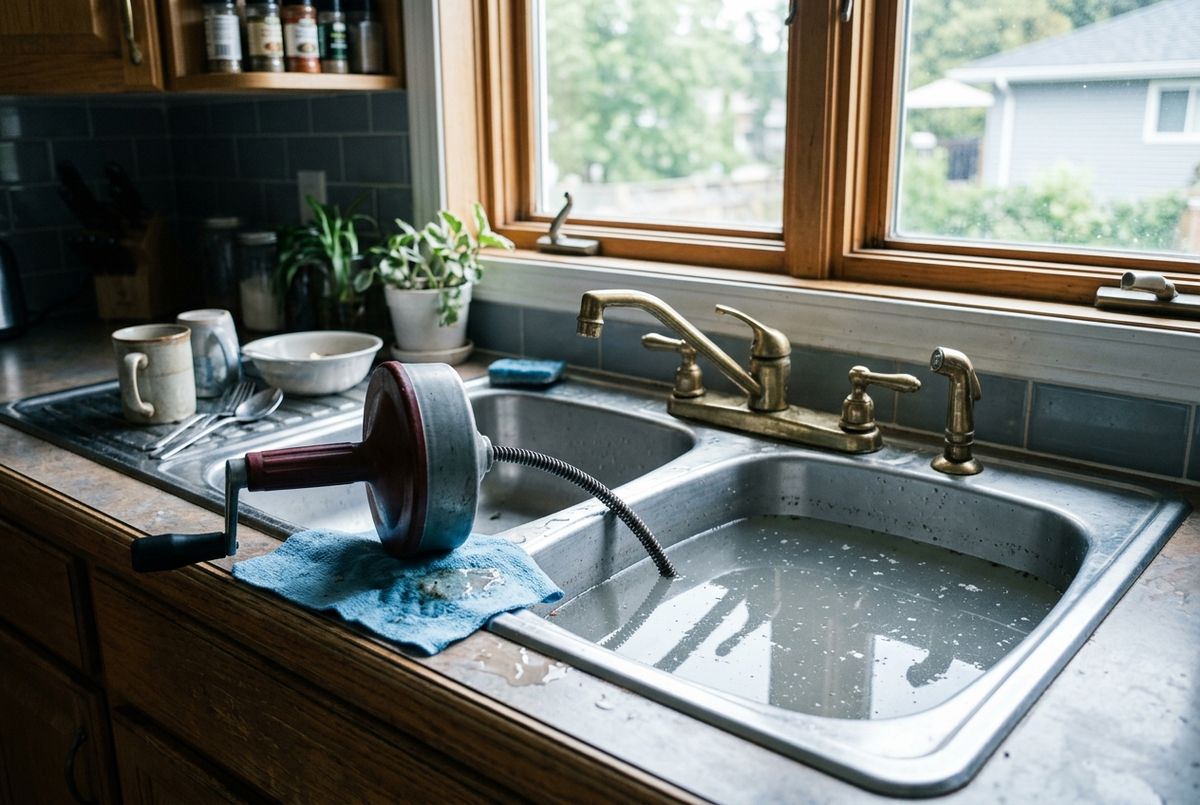
A kitchen sink that drains slower every week, a tub that fills up around your ankles, or a floor drain doing something alarming when the washing machine empties — we clear all of it, across Calgary and the immediate surrounding area, usually same day. Someone answers at 2 a.m. and will tell you honestly whether you need us tonight or whether it keeps until morning.
Drain blocked right now?
Describe what's happening and we'll tell you on the phone whether it's a local clog or your main line — and what you'll owe if we come out and you decide not to proceed.
[LICENCE / WCB / INSURANCE INFO]
One fixture, or several? This is the whole diagnosis
Short answer: if one fixture is slow and everything else drains normally, you have a local clog in that fixture's trap or branch line — annoying, cheap, not urgent. If several are slow at once, or a basement floor drain gurgles or backs up when the washing machine empties, the blockage is in your main line, and that is urgent: the next load of laundry has nowhere to go but your basement floor.
| What you're seeing | What it means | What to do now |
|---|---|---|
| One sink or tub is slow, everything else fine | Local clog — hair, soap, grease in the trap or branch | Plunger and hot water. Book normal hours if that doesn't do it. |
| Toilet backs up but sinks drain fine | Usually that toilet's trap or the branch behind it | Flange plunger, not a cup plunger. Stop flushing. |
| Two or more fixtures slow at once | Shared branch, or the main line closing up | Reduce water use and get it looked at this week. |
| Basement floor drain backs up when the washer drains | Main line. The lowest opening in the house is where it comes out | Stop using water entirely. Call now. |
| Toilet bubbles when the tub drains | Air can't move — venting, or a partial main blockage | Worth a look; it gets worse. |
| Sewage — not water — coming up a drain | Could be your line or a surcharged City main | Call 311 first, then a plumber. See below. |
If it's sewage coming up rather than water going down slowly, call 311 before you call a plumber. It costs nothing and it's the only way to find out whether the problem is your line or a surcharged City main — and if it's the main, half your block is backing up and augering your pipe accomplishes nothing. Know the limits, though: City crews will not move furniture, pull back carpet, remove toilets or open drywall to find the source, and if it's on your side they'll tell you to call a plumber.
Source: The City of Calgary — sewage backups. More on the boundary: who owns which pipe.
If your basement has taken sewage more than once, clearing the line is the emergency fix, not the long-term one — a backwater valve is what stops the street's problem becoming your floor's, and water seeping up around the slab rather than out of a drain belongs with a sump pump instead. One winter variation: a main that backs up during a deep cold snap in a house where nothing has changed may be a frozen sewer line rather than a blockage. It looks identical from inside; the fix is completely different.
What to try yourself, and what to leave alone
Plenty of single-fixture clogs clear without a plumber, and we'd rather you saved the money. Nothing here puts you offside, either: the City does not require a plumbing permit to remove a blockage in the drainage, repair a leak, or replace existing faucets and fixtures.
Source: The City of Calgary — homeowner electrical and plumbing permits (checked August 2026). Where the line falls on bigger jobs: DIY plumbing and the law in Alberta.
- Hot water and a plunger — yes. Cover the cup so you're moving water rather than air, block the overflow with a wet cloth, and use steady strokes rather than one heroic shove. On a double sink, plug the other side or you'll just push water across.
- Clean the trap — yes, if you're comfortable. Bucket underneath, unscrew the two slip nuts, and look at what comes out; on a bathroom sink it's a hairball nine times out of ten. Reassemble hand-tight and watch for drips.
- Pull the pop-up assembly on a bathroom sink — yes. The rod behind the drain catches hair and is usually the whole problem.
- A small drum auger on a kitchen sink — maybe. Go in through the cleanout or the open trap, not the drain opening, and don't force it — a cable driven hard into a bend can punch through a corroded old line, and then you have a leak inside a wall instead of a slow sink.
- A toilet — closet auger, not a bare cable, which scratches the porcelain permanently.
- Anything on the main line — no. Rented drain machines are heavy, powerful and unforgiving. This is the point to call.
Chemical drain cleaners: honestly, no
Caustic drain cleaner only attacks what it can stay in contact with, so on a fully blocked line it sits on top of the obstruction in a pipe full of standing water, diluted and going nowhere — and what doesn't work stays parked in your trap. Repeated use is hard on aging cast iron and on the solvent-welded joints in older ABS, a great deal of Calgary's housing stock, and it is hazardous for whoever opens that line next: a plumber, or you an hour later. If you've already poured something in, say so when you call; everybody would rather know.
Enzyme products are a different thing: slow-acting biological maintenance on a drain that still flows is a reasonable habit, but it will not rescue a blocked line tonight.
A drain that keeps clogging is a symptom, not bad luck
If you're clearing the same drain twice a year, the clog isn't the problem — it's the evidence. Something about that line collects debris, and until that changes you're buying the same service call on a schedule. The usual causes in Calgary homes:
Grease buildup
Cooled fat lines the pipe wall and narrows it a little more each month, then catches everything that goes past. Classic on long kitchen branches in older houses.
A belly in the line
A settled section that holds standing water instead of draining through, so solids stop there every time. No amount of augering fixes a shape problem.
Root intrusion
Fine roots find a joint and grow into a mat that catches paper and grease. Cutting them out buys a couple of years; they come back, because the opening is still there.
A venting problem
Drains need air behind the water to flow. A blocked or frost-capped vent stack makes them gurgle, run slow and pull traps dry — which is where basement sewer smells come from.
When a camera inspection is worth paying for — and when it isn't
Worth it: the same line has blocked more than once; the blockage is in the main and you want to know why before agreeing to anything bigger; the house is pre-1970 and you've never seen the sewer's condition; you're planning a basement bathroom and want to know what you're tying into; or someone has recommended a line replacement and you want evidence rather than an opinion. A camera turns "your line is bad" into "root mass at 9 metres, belly at 14" — a conversation you can make decisions from.
Not worth it: a bathroom sink blocked for the first time in ten years. That's a hairball. Pay for a camera when you're deciding something.
If you're buying a house rather than fixing one, the same tool has a different job — see sewer scope before you buy. Either way, ask up front whether you get a recorded file and distances or just a verbal opinion. Only one is useful in a negotiation.
Snaking versus hydro jetting, in plain terms
Snaking (augering) drives a rotating steel cable down the line with a cutting head on the end, punching through the blockage and, with the right head, cutting roots out. It's fast and cheap and it restores flow — what you want when there's water on the floor tonight. What it doesn't do is clean the pipe wall, so the line re-narrows and you're back in a year.
Hydro jetting runs a high-pressure hose with a rear-facing nozzle down the line and scours the walls, flushing debris back toward the cleanout. On a grease-lined kitchen main that restores something close to the original diameter, so the interval between problems gets much longer rather than slightly longer. It costs more and takes longer.
The honest tradeoff: on a fragile old line — deteriorated cast iron, cracked clay tile, a pipe holding together on optimism — high pressure can make things worse. Clear it, camera it, then decide. Anyone quoting jetting on a pre-1960 line they've never seen is guessing with your pipe.
Grease, roots and the Calgary specifics
The kitchen sink
Everything you pour down warm arrives cool. Bacon fat, the oil off a roasting pan, the film off dishes — it congeals on the pipe wall a few metres along, and an unheated crawl space makes it worse because the fat sets faster. A garburator doesn't help; it adds ground organic matter for the grease to hold onto. Scrape plates into the bin, wipe pans before washing, and pour cooking fat into a tin.
Roots, boulevard trees and clay tile
Root intrusion here has a specific profile. Established neighbourhoods have mature boulevard trees — elm, poplar, ash — whose roots range far past the canopy looking for water, and homes built before roughly 1970 typically have clay tile sewer lines laid in short sections with mortared joints. Frost cycling nudges those joints open, warm moist sewer air escapes, and the roots go straight to it. On a house like that, preventive augering every year or two is far cheaper than an emergency backup and a basement cleanup — and when a line is past saving, a camera survey with distances tells you whether the failure sits on your side of the property line or The City's, the distinction that decides who pays. We explain it on the main plumbing page and in our responsibility guide. If the survey shows the line is past augering, sewer line repair in Calgary covers trenchless versus digging and the City permits a boulevard dig triggers.
What you get when we clear a drain
- The fee named before we drive over, including what you owe if you don't proceed — so the price never arrives as a surprise on the doorstep. More on how we price: what plumbers charge in Calgary.
- The cause, not just the clearance, so on a repeat blockage you can decide whether to keep clearing it or fix it properly.
- Camera footage when we run one — the file and the distances, so a second opinion doesn't cost you a second inspection.
- Honest triage on the phone. If it can wait until Tuesday we'll say so, rather than charge an after-hours premium for something that would have been fine at regular rates.
[ADD REAL REVIEWS HERE] — deliberately empty until there are real reviews from real Calgary customers. When you're evaluating any plumber, us included, read the two-star reviews on their Google Business Profile rather than the five-star ones.
Get the drain cleared and find out why it blocked
Same-day drain cleaning across Calgary, with the diagnostic fee named up front and credited against the repair — so finding out what's wrong never costs twice.
Questions Calgary homeowners actually ask
How do I know if it's just my sink or something bigger?
Count the fixtures. If one sink is slow and every other drain in the house runs normally, it's a local clog in that trap or branch — hair, soap, grease. Irritating, cheap, and it can wait for a weekday.
If two or more are slow at once, or the basement floor drain gurgles or backs up when the washing machine empties, that's your main line and it's a different situation entirely. The floor drain is the lowest opening in the house, so it's where everything comes out first. Stop running water — no laundry, no dishwasher, no showers — and get someone out, because every litre you send down has nowhere to go but your floor.
Should I just pour drain cleaner down it?
Honestly, no, and not because we want the call. If the line is completely blocked the product just sits on top of standing water, diluted, doing very little. What doesn't work stays parked in your trap. It's rough on aging cast iron and on older ABS joints, which describes a big chunk of Calgary's housing stock. And it makes it genuinely dangerous for whoever opens that pipe next — a plumber, or you an hour later.
Hot water and a proper plunger first. If you've already poured something in, just tell us when you call. Nobody's going to give you a hard time about it, but we do need to know before anyone pulls a trap apart.
Why does the same drain keep blocking every few months?
Because the clog is the symptom, not the problem. Something about that line collects debris, and clearing it without finding out why just puts you on a subscription. The usual suspects around here are grease coating the pipe wall on a kitchen line, a belly — a settled section that holds water instead of draining through — or roots in an older clay tile sewer.
There's a fourth one people miss: venting. Drains need air behind the water to flow, and a blocked or frost-capped vent stack makes them gurgle, run slow and pull the traps dry, which is where basement sewer smells come from. Frost closing a vent is a real thing in a Calgary deep freeze. A camera pass, or a look at the vent from the roof, sorts out which of the four you've got.
Is hydro jetting better than snaking?
Better at a different job. Snaking bores a hole through the blockage and gets you flowing again fast, which is exactly what you want when there's water on the floor. What it doesn't do is clean the pipe wall, so a grease-lined kitchen main narrows straight back up and you're calling again next year. Jetting scours the walls and actually restores the pipe diameter, so the gap between problems gets a lot longer.
But it isn't automatically the right answer. On a fragile line — deteriorated cast iron, cracked clay tile in a pre-1960 house — high pressure can turn a bad pipe into a broken one. The sensible order is clear it, camera it, then decide. Anyone quoting you jetting on a line they've never looked at is guessing with your pipe.
Sewage is coming up the basement floor drain. Who do I call first?
311, before a plumber. It's free and it's the only way to find out whether the City main is surcharged or the blockage is in your line. If the main is backed up, half the block is dealing with the same thing and paying someone to auger your pipe accomplishes nothing.
Know what The City will and won't do: an agent determines whether it looks like internal plumbing or City infrastructure, but crews won't move furniture, pull back carpet, remove toilets or open drywall to find the source. If it's on your side they'll tell you to call a plumber. In the meantime, stop using water anywhere in the house, keep people and pets out of the room, and photograph everything before you clean up — your insurer will want it.
My house is from the 1950s. Are tree roots inevitable?
Not inevitable, but you're in the profile. Homes built before roughly 1970 in Calgary usually have clay tile sewer lines laid in short sections with mortared joints, and our established neighbourhoods have big mature boulevard trees whose roots range far past the canopy hunting for water. Frost cycling nudges those joints open a fraction, warm damp sewer air leaks out, and the roots head straight for it.
The practical move isn't panic, it's knowing the condition. A camera pass tells you whether you're looking at a replacement in five years or twenty, and preventive augering every year or two on a known root line is far cheaper than an emergency backup and a basement restoration. It also tells you whether the defect sits on your side of the property line or The City's, which decides who pays.